iTRUST AI Doctor Scribe

Smarter documentation for eye care providers who want to move faster without losing the human side of care
In eye care, speed matters. Accuracy matters. Patient trust matters. Workflow matters. But one of the biggest drains on all four is still documentation.
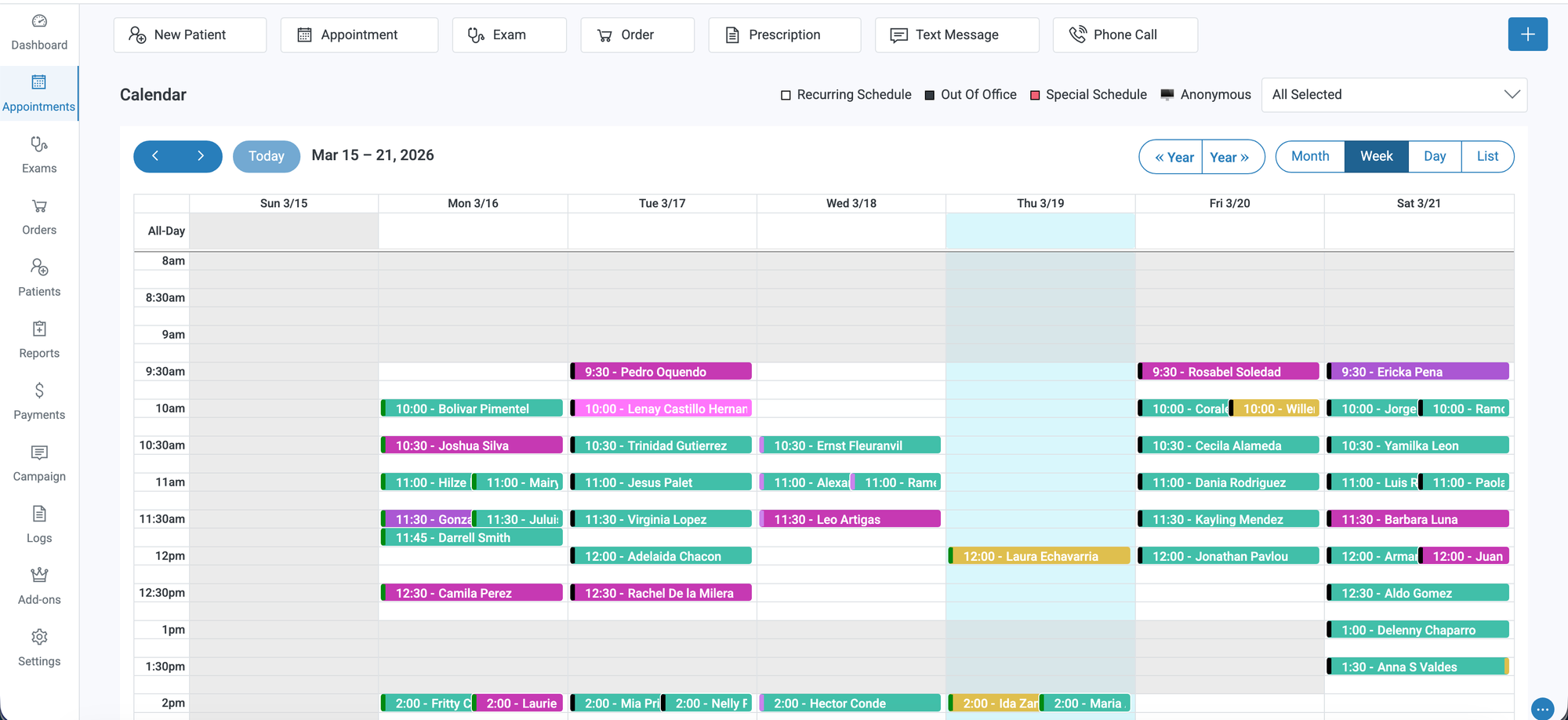
Every provider knows the pattern. The schedule is full. Patients need attention. Staff are moving quickly. The clinical side of the visit may be strong, but the charting burden never really leaves. It waits between patients. It follows the provider throughout the day. It extends past the last appointment. It quietly consumes time, attention, and energy that should be going toward patient care, case review, education, and decision-making.
That is the problem iTRUST AI Doctor Scribe is built to solve.
iTRUST AI Doctor Scribe is designed to help eye care providers reduce the manual burden of documentation, streamline charting, and stay more focused during the patient encounter. The point is not to add flashy technology for the sake of it. The point is to solve one of the most common and expensive workflow problems inside a modern practice.
That matters because documentation is not a small side issue anymore. Federal and academic sources alike have described documentation burden as a meaningful contributor to clinician stress and burnout, and have also noted that heavy EHR use can interfere with communication and the patient experience during face-to-face care.
Why documentation is a bigger practice problem than most offices realize
A lot of practices think about documentation only as a provider inconvenience. That is too narrow.
Documentation burden is really an operational issue, a clinical issue, a staff-efficiency issue, and a patient-experience issue all at once. CMS has explicitly said it repeatedly heard from clinicians that documentation burden associated with evaluation and management coding was a major source of burnout, and AHRQ’s technical brief ties documentation burden to broader administrative burden, patient safety, and quality-of-care concerns.
In real life, the cost shows up in layers.
A provider spends more time typing repetitive information than thinking clinically.
Attention is split between the patient and the screen.
Visits can feel less natural because the chart keeps interrupting the conversation.
The schedule becomes easier to back up when notes take too long.
End-of-day documentation spills into time that should have gone back to the provider.
Over time, the burden becomes normalized. But normalized does not mean efficient.
This is one of the clearest reasons AI documentation support has become such an important category inside healthcare software. If there is a repetitive, high-friction task that drains provider time every day, that is exactly the kind of problem software should solve.
Why this matters even more in eye care
Eye care is not a generic specialty. The workflow is different. The pace is different. The terminology is different. The relationship between the clinical exam, the patient conversation, and the downstream office workflow is different.
That is why eye care practices benefit most from tools built around the reality of eye care rather than generic healthcare assumptions.
A documentation solution has to make sense in a real exam flow. It has to support the provider, not slow the provider down. It has to help with speed, but it also has to preserve control. It has to fit into an environment where the patient experience is shaped not just by diagnosis and treatment, but by how smooth, focused, and professional the entire interaction feels.
That is where iTRUST AI Doctor Scribe stands out conceptually.
It is not being framed as a generic AI gadget. It is being positioned as a practical documentation tool inside a platform built for eye care practices. That matters from both a workflow standpoint and an EEAT standpoint because credibility gets stronger when a product clearly reflects the needs of the specialty it serves.
What iTRUST AI Doctor Scribe is really designed to do
The biggest mistake in AI marketing is pretending the value is the AI itself.
It is not.
The value is what the AI allows the provider and the practice to do better.
For iTRUST AI Doctor Scribe, that means helping providers document faster, reducing repetitive manual note work, and making it easier to stay focused on the patient encounter. It means giving the provider more room to listen, explain, think, and move through the day without feeling trapped by the chart.
At a practical level, that can support several meaningful outcomes inside a practice:
Faster chart completion
Less manual repetition
Better schedule flow
Less administrative drag during patient visits
Reduced documentation fatigue
A more focused and present provider experience
A better overall impression for the patient
These benefits are exactly why documentation burden has become such a major conversation in health IT. Federal health IT leadership has described documentation burden as being at the forefront of clinician burnout concerns, and academic work has shown that when EHR activity gets heavier, it can crowd out other valuable activities like chart review and information exchange.
The patient experience side of the equation
This is where a lot of software companies undersell the real value.
Documentation is not only a back-office issue. It directly affects the patient encounter.
Research and academic commentary have described EHR use during visits as changing eye gaze, posture, and conversational flow, and have noted that patients may perceive clinicians as distracted when too much attention is going toward the computer. At the same time, more patient-centered EHR use can help maintain trust when technology supports rather than dominates the interaction.
That is a huge point for eye care practices.
When a provider is not stuck entering every detail manually in real time, the visit has the potential to feel more human. The provider can hold eye contact more naturally. Explanations can feel less rushed. Patient concerns can be heard more clearly. The encounter becomes less about screen management and more about care.
That matters because patients are not evaluating the visit only on the outcome. They are also evaluating the feeling of the visit.
Did the doctor seem attentive
Did the conversation feel smooth
Did the office feel efficient
Did the provider seem confident and focused
Those are trust signals.
And if documentation support helps preserve those signals, then the value goes beyond note creation. It starts helping protect the brand and reputation of the practice itself.
Why provider control still matters

Strong healthcare AI does not eliminate the provider. It supports the provider.
That distinction is critical.
No serious practice wants blind automation. No serious provider wants to surrender ownership of the chart. The right model is not “let AI take over.” The right model is “let AI reduce low-value friction while the doctor stays in control.”
That is the balance that drives adoption.
Providers want faster workflows, but they also want confidence in what enters the record. They want less typing, but not less oversight. They want efficiency, but not at the cost of accuracy or judgment.
That is why the best positioning for iTRUST AI Doctor Scribe is not replacement. It is assistance.
It is there to support the provider’s workflow, reduce repetition, and make the clinical day lighter without weakening the provider’s final control over the record.
Why this matters for burnout, retention, and growth

A practice can only scale well if its systems scale well.
That is why documentation should be viewed as infrastructure, not just an annoyance.
Recent university-based reporting on ambient AI scribes has described reductions in physician burnout and improvements in patient-facing attention, while broader university and federal sources continue to connect documentation load with burnout, low-value data-entry work, and overall dissatisfaction with the EHR experience.
Again, that does not mean any specific product should promise those exact results. But it does mean the category itself is real. The problem is real. The pressure is real. The opportunity is real.
For a growing eye care organization, the upside is not limited to one doctor saving a few minutes.
It can mean:
Better provider stamina across the week
Cleaner workflows across multiple locations
More predictable pacing in busy clinics
Less charting spillover after hours
A more scalable operating model
A better provider experience, which helps retention
A stronger patient experience, which helps loyalty and referrals
That is why smart practices look at documentation tools as part of a much bigger operational picture.
Why purpose-built software wins
A generic platform can say it has AI. That does not mean it fits a specialty.
What builds trust is relevance.
A platform built for eye care is better positioned to understand the flow of the visit, the way providers think, the pace of the schedule, and the type of documentation burden that actually slows the office down. That gives the product story more authority because it is tied to real-world practice realities rather than abstract tech language.
From an EEAT standpoint, this is exactly where a page like this should be strong.
It should sound like it understands the day-to-day life of a practice.
It should sound like it knows what slows doctors down.
It should sound like it respects the difference between administrative work and clinical value.
It should sound like it was written by a company that knows eye care software should make the practice feel lighter, not heavier.
That is the lane this page should own.
What makes iTRUST AI Doctor Scribe different in the market

The strongest positioning here is not to overstate. It is to stay practical and credible.
iTRUST AI Doctor Scribe should be framed as a smarter documentation workflow for eye care providers who want to reduce friction without compromising control. The message should center on operational usefulness, provider focus, and patient experience.
That means leading with points like these:
Built for eye care workflows
Designed to reduce manual charting burden
Helps providers stay focused during the patient encounter
Supports faster and more efficient documentation
Reduces friction across the clinical day
Fits into a broader practice-management ecosystem built for eye care
That positioning is believable. It is useful. And it aligns with what authoritative external sources have already established about the broader documentation problem in healthcare.
The bigger idea: technology should fade into the background
The best healthcare technology does not demand attention. It returns attention.
That is the deeper promise behind AI doctor scribing when it is done well.
The goal is not to make the visit feel more technical. The goal is to make it feel less burdened by technology. Yale’s 2025 reporting on ambient AI scribes quoted physician leaders describing the benefit as letting technology fade into the background so care can return to the foreground. That framing is powerful because it captures what practices actually want: not more software noise, but less workflow drag.
That is exactly how iTRUST AI Doctor Scribe should be understood.
A better way to document
A better way to preserve provider focus
A better way to keep the day moving
A better way to protect the patient experience
A better way to remove friction from the exam room
Final thoughts

The future of eye care software is not about piling on more features.
It is about identifying the parts of the day that create the most drag and solving them in a way that feels natural, trustworthy, and useful.
Documentation is one of those areas.
It steals time. It divides attention. It adds fatigue. It slows momentum. And because it is woven into every patient visit, it becomes one of the most important workflow problems a practice can solve well.
iTRUST AI Doctor Scribe is compelling because it speaks directly to that need.
It gives eye care practices a smarter path to documentation. It helps providers reduce manual burden. It supports a more efficient clinical rhythm. And it helps protect something software should never weaken in the first place: the human connection between provider and patient.
For practices that want to work faster, document smarter, and create a smoother experience across the day, iTRUST AI Doctor Scribe is the kind of feature that can make modern eye care software feel like a real advantage instead of just another system to manage.
CTA Section
Smarter documentation starts here
See how iTRUST AI Doctor Scribe can help your practice reduce charting burden, improve provider efficiency, and keep the focus on patient care.
Built for modern eye care practices
Whether your goal is better workflow, a better patient experience, or a more scalable clinical operation, iTRUST AI Doctor Scribe is designed to support a more efficient day from start to finish.
FAQ
What is iTRUST AI Doctor Scribe
iTRUST AI Doctor Scribe is a documentation support tool designed to help eye care providers reduce manual charting effort and work more efficiently during the clinical day.
Is iTRUST AI Doctor Scribe built for eye care
Yes. The product is positioned around the needs of eye care practices, which is important because optometry and ophthalmology workflows differ from generic healthcare workflows.
How does AI doctor scribing help providers
In general, AI doctor scribing aims to reduce repetitive note work, streamline documentation, and help providers stay more focused during the patient encounter. Broader federal and university sources support the idea that documentation burden is a meaningful pain point in healthcare workflows.
Can AI documentation improve patient experience
It can help indirectly by reducing screen-focused friction during the visit and allowing providers to stay more present. Research on EHR use during face-to-face visits has linked screen-heavy workflows to communication disruption, eye-gaze changes, and patients feeling less heard.
Does iTRUST AI Doctor Scribe replace the doctor
No. The strongest and most credible positioning is that it supports the doctor’s workflow while the provider remains responsible for judgment, review, and final control.
Why does documentation burden matter so much
Because it affects time, attention, provider fatigue, schedule flow, and the overall patient experience. It is not just an admin issue. It is a practice performance issue. Federal and academic sources have repeatedly connected documentation burden to clinician burnout and lower-value EHR work.
References
https://www.healthit.gov/news/leveraging-ehr-audit-logs-inform-clinician-burnout-interventions/
https://effectivehealthcare.ahrq.gov/products/documentation-burden/technical-brief
https://www.ncbi.nlm.nih.gov/books/NBK608542/
https://pmc.ncbi.nlm.nih.gov/articles/PMC11152769/
https://docit.ucsf.edu/news/new-study-shows-high-levels-ehr-documentation-burden-crowd-out-use-hie